
How to Dance Bachata: Beginner's Complete Guide
The bachata basic is an eight-count, side-to-side step with a tap and hip movement on counts 4 and 8. The music is slower than salsa, which gives beginners more time to feel each step.
The short answer
Yes! Bachata is often considered easier to learn than salsa. The basic step is a simple side-to-side pattern counted 1-2-3-tap, and the music is slower than salsa, giving beginners more time to find the rhythm.
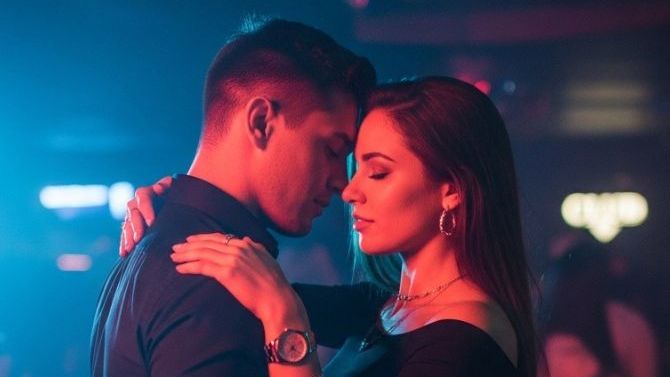
How to dance bachata at a glance
| Counts | Eight counts: steps on 1-2-3 and 5-6-7, taps on 4 and 8 |
|---|---|
| Basic step | Side to side, changing direction after every tap |
| Time signature | 4/4, four beats per measure |
| Typical tempo | About 110 to 150 BPM, slower than salsa |
| Origin | Dominican Republic, 1960s |
| Main styles | Dominican, moderna, sensual and fusion |
| Sensual bachata | Created in Cádiz, Spain, by Korke Escalona and Judith Cordero |
Why Learn Bachata?
Bachata is often considered easier to learn than salsa. Unlike salsa's fast footwork, bachata's basic step is intuitive and the music is slower, giving you more time to feel the rhythm. But don't let the simplicity fool you, bachata has incredible depth once you start exploring body movement, musicality, and the different styles of bachata.
Bachata is also a social dance that is now danced all over the world. Once you know the basics, you can walk into Latin dance events in many countries and find people to dance with. The community is welcoming, the music is addictive, and the connection between dance partners is unlike anything else.
The Basic Step (1-2-3-Tap)
The bachata basic step is a simple side-to-side pattern done in counts of 8. Here's how it works:
Leader's Basic (Starting Left)
- Count 1: Step left foot to the left
- Count 2: Bring right foot to meet left (weight transfer)
- Count 3: Step left foot to the left again
- Count 4: Tap right foot next to left (with a hip pop)
- Counts 5-8: Repeat going right, step right, together, right, tap left
Follower's Basic (Starting Right)
- Count 1: Step right foot to the right
- Count 2: Bring left foot to meet right
- Count 3: Step right foot to the right again
- Count 4: Tap left foot next to right (with a hip pop)
- Counts 5-8: Mirror, step left, together, left, tap right
The key is the tap on count 4 and 8. This is where the "pop" happens, a quick hip movement that gives bachata its characteristic look. Don't overthink it at first; just let your hip naturally lift as you tap.
Understanding Bachata Timing
Bachata is in 4/4 time, meaning there are 4 beats per measure and 8 counts in each full cycle of the basic step. The music typically features the bongó pattern and a rhythmic guitar strum that make the beat easy to identify.
Listen for the bass guitar, in the verses it usually plays on beats 1, 3 and 4 of each measure, anchoring the beat you step to. The güira (metal scraper) provides a steady "chk-chk-chk" that keeps the tempo. Spend time just listening to bachata before dancing, your body will start to internalize the rhythm naturally.
Basic Turns & Moves
Once you're comfortable with the basic step, these are the first moves to add:
- Right Turn (for follower), Leader guides the follower into a clockwise turn on counts 5-6-7-8
- Cross Body Lead, Leader steps out of the way while guiding the follower across, changing positions
- Basic with Forward/Back, Instead of side-to-side, step forward (1-2-3-tap) then back (5-6-7-8)
- Hand Changes, Switching from a one-hand hold to two hands, or from open to closed position
- Shadow Position, Both partners face the same direction, leader behind follower
Body Movement & Musicality
What separates a good bachata dancer from a great one is body movement and musicality. This means using your body, hips, torso, shoulders, to express the music, not just stepping through the counts.
- Hip movement, Let your hips naturally sway with each step. The tap on 4 and 8 should have a noticeable hip pop
- Body waves, Especially in bachata sensual, rolling waves through the torso add expression
- Musical accents, Slow down for emotional phrases, hit strong beats with sharp movements
- Isolation, Moving one body part while keeping others still creates visual contrast
Dance Styles to Explore
As you progress, you'll discover that bachata dancing has several distinct styles:
- Bachata Sensual, Body waves, head rolls, close connection, musical interpretation. Born in Spain
- Bachata Típico/Dominican, Fast footwork, syncopation, lots of energy. The original style
- Bachata Moderna, Turns & patterns, wraps and structured partnerwork, drawing on other partner dances like salsa
- Bachata Fusion, Incorporating elements from other dances, such as hip-hop
Tips for Your First Social
Ready to hit the dance floor? Here's how to make the most of your first bachata social:
- Wear the right shoes, Smooth soles that let you pivot. Avoid rubber-soled sneakers
- Start with the basic, You don't need fancy moves. A solid basic with good timing is more enjoyable than sloppy patterns
- Ask anyone to dance, The social dance community is welcoming. Everyone was a beginner once
- Listen to the music, Let the song guide your movement. Slow songs = slow, expressive dancing. Fast songs = more footwork and energy
- Say thank you, After each song, thank your partner. It's basic social dance etiquette
Check out our list of the 25 best bachata songs to start building your playlist for practice sessions.
Beginner tutorial: “Bachata Beginner Basic Steps Tutorial - Demetrio & Nicole - Bachata Dance Academy”, from the official Bachata Dance Academy YouTube channel.
Frequently asked questions
Is bachata easy to learn?
Yes! Bachata is often considered easier to learn than salsa. The basic step is a simple side-to-side pattern counted 1-2-3-tap, and the music is slower than salsa, giving beginners more time to find the rhythm.
How long does it take to learn bachata?
Most people can try the basic step on their first day. With regular classes and practice, you'll become comfortable enough for social dancing. It takes longer to develop a smooth, musical style.
What's the difference between bachata sensual and traditional bachata dancing?
Traditional bachata dancing emphasizes footwork, syncopation, and hip movement. Bachata sensual focuses on body waves, head rolls, close connection, and musical interpretation with slower, more fluid movement.
What shoes should I wear for bachata dancing?
For social dancing, wear shoes with smooth soles that allow you to pivot and slide easily. Dance shoes or suede-soled shoes are ideal. Avoid rubber soles, street sneakers, or shoes that grip the floor, they can make turning harder and hurt your knees.
Sources
- Bachata (dance) - Wikipedia
- Bachata (music) - Wikipedia
- Cross-body lead - Wikipedia
- Definitions of Allowable Positions and Holds - National Dance Council of America
- Bachata Dance: Complete Overview & Guide - Salsa Vida
- The Different Styles of Bachata Dancing - Salsa Vida
- Salsa vs Bachata: What's the Difference? - Salsa Vida
- Social Dancing - Salsa Vida
- Best Shoes for Salsa Dancing - Salsa Vida
- How to Dance Bachata: A Complete Beginner's Step-by-Step Guide - Dance With Me
- Traditional vs. Sensual Bachata - Dance With Me
- Bachata Music: Songs, Instruments & What Makes It Bachata - Dance Dojo
- Breaking Down Bachata, Part 3: Guitars - Rocksmith+ (Ubisoft)