
What Is Bachata? The Complete Guide to the Dance, Music & Culture
From Dominican barrios to dance floors in every city on Earth, bachata is the world's most popular Latin partner dance. Here's everything you need to know.
The short answer
Bachata is a music genre and partner dance from the Dominican Republic. Guitar-driven melodies, romantic lyrics, and a close-embrace dance with a 4-beat side-to-side step pattern. UNESCO Intangible Cultural Heritage since 2019.
Bachata at a glance
| Origin | Dominican Republic, early 1960s |
|---|---|
| Genre | Guitar-based Latin music with romantic lyrics |
| Dance | Partner dance with 4-beat step pattern (1-2-3-tap) |
| Tempo | 130-140 BPM (slower than salsa) |
| UNESCO | Intangible Cultural Heritage of Humanity (2019) |
| Key artists | Romeo Santos, Aventura, Prince Royce, Juan Luis Guerra |
What Is Bachata?
Bachata is both a music genre and a partner dance that originated in the Dominican Republic in the early 1960s. It's characterized by guitar-driven melodies, romantic lyrics about love and heartbreak, and a dance performed in a close embrace with a distinctive side-to-side step pattern.
Today, bachata is danced in virtually every major city on Earth. There are bachata schools, festivals, and social events on every continent. It's one of the easiest Latin dances to learn, which has fueled its explosive global growth.
What Does "Bachata" Mean in English?
The word "bachata" originally meant "a party" or "a get-together" in Dominican Spanish. It referred to informal backyard gatherings where people would play guitar, drink rum, and socialize. The music played at these gatherings eventually became known as "bachata."
For decades, the Dominican upper class used the term dismissively. They called it "música de amargue" (music of bitterness), an insult that associated the genre with poverty and vulgarity. The genre was effectively banned from mainstream media for almost 50 years.
Today, the word "bachata" is spoken with pride across the world. What was once an insult became an identity.
The Music: What Does Bachata Sound Like?
Bachata music is instantly recognizable by its warm, guitar-driven sound. The lead guitar (called the requinto) plays melodic riffs and arpeggios that give bachata its distinctive romantic, yearning quality.
The 5 Core Instruments
The lyrics are almost always about love, falling in love, heartbreak, longing, passion, and romance. This emotional depth is what makes bachata so powerful as both music and dance.
The Dance: How Is Bachata Danced?
Bachata is danced with a partner in a close or semi-close embrace. The basic step is a 4-beat side-to-side pattern:
- Step 1: Step to the side
- Step 2: Bring feet together
- Step 3: Step to the side again
- Step 4: Tap (with a hip pop), this is the signature move
Then repeat in the opposite direction. That's it, that's the foundation of all bachata. Everything else, turns, body waves, dips, styling, builds on this simple pattern.
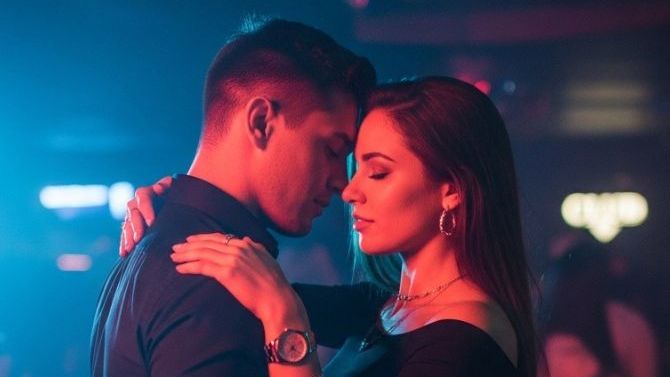
What makes bachata special as a dance is the connection between partners. The slow tempo gives dancers time to feel the music together, creating an intimate, romantic experience. Read our complete guide to dancing bachata to learn more.
The 4 Types of Bachata
The closest to how bachata is danced in the Dominican Republic. Emphasizes footwork, musicality, and playfulness. Open-to-closed position with space between the partners. Fast, syncopated footwork patterns.
A blend of traditional and contemporary styles. More turns, cross-body leads, and styling than traditional. This is the most common style at dance socials worldwide, the global standard.
Developed in Spain, this style went viral on social media. Features body waves, isolations, dips, and very close connection. The style you see in most viral bachata dance videos. Read our full guide →
The raw, acoustic guitar-driven style from the Dominican countryside. Faster tempo, more guitar solos, and deeply rooted in the original sound of the Cibao region.
A Brief History of Bachata
- 1960s: José Manuel Calderón records the first bachata songs. The genre is rejected by mainstream Dominican society.
- 1960s-80s: Bachata lives underground, banned from radio and TV, played only in bars and rural gatherings.
- 1990: Juan Luis Guerra's "Bachata Rosa" becomes a mainstream hit, beginning bachata's acceptance.
- 2002: Aventura's "Obsesión" goes #1 globally, bachata becomes an international phenomenon.
- 2010s: Romeo Santos fills stadiums worldwide, sensual bachata goes viral on social media.
- 2019: UNESCO declares bachata Intangible Cultural Heritage of Humanity.
Read the full history of bachata for the complete story.
How to Get Started with Bachata
Ready to try bachata? Here's your roadmap:
- Take a class
Find a local bachata class near you. Most studios offer beginner-friendly sessions. - Learn at home
Use apps and YouTube tutorials to practice the basics before your first social. - Listen to the music
Build familiarity with bachata rhythms using our curated playlists. - Go to a social
Bachata socials are welcoming events where you can dance with people of all levels. - Attend a festival
Bachata festivals are multi-day events with workshops, performances, and social dancing.
Bachata is one of the easiest Latin dances to learn. Most people can dance comfortably at a social within a few weeks of classes.
Frequently asked questions
What is bachata?
Bachata is a music genre and partner dance from the Dominican Republic. Guitar-driven melodies, romantic lyrics, and a close-embrace dance with a 4-beat side-to-side step pattern. UNESCO Intangible Cultural Heritage since 2019.
What does bachata mean in English?
"Bachata" originally meant "a party" or "a get-together" in Dominican Spanish, informal gatherings with guitar music and socializing. The music played at these gatherings became the genre.
What are the different types of bachata?
Four main styles: Traditional/Dominican (footwork-focused), Modern/Fusion (global standard), Sensual (body waves, developed in Spain), and Típico (raw, acoustic, from the countryside).
Is bachata hard to learn?
No, bachata is one of the easiest Latin dances. The basic step (1-2-3-tap) can be learned in one class. The slow tempo gives time to find the rhythm. Advanced techniques take longer.
What instruments are used in bachata?
Five core instruments: requinto (lead guitar), segunda (rhythm guitar), bass guitar, bongos, and güira (metal scraper). Modern productions may add keyboards and electronics.