
What Is Kizomba?
Kizomba is a music genre and a partner dance from Angola. It took shape in Luanda in the late 1970s and 1980s, when Angolan musicians slowed down semba, the country's older dance music, and blended it with zouk from the French Caribbean. The dance is slow and grounded: a close embrace, smooth walking steps and swaying hips, improvised rather than choreographed.
The word means "party" in Kimbundu, one of Angola's most widely spoken languages, and that is still the best description: kizomba is social music, made for a crowded floor late at night. From Lisbon's African nightclubs it grew into a worldwide dance scene within a decade, and in April 2024 Angola declared it part of the nation's intangible cultural heritage.
What Does "Kizomba" Mean?
Kizomba is a Kimbundu word for a party, a celebration or a social gathering. Kimbundu is a Bantu language spoken around Luanda, and an 1896 account by the Swiss missionary and linguist Héli Chatelain already recorded kizomba as the Kimbundu word for "dance". The name became a music label almost by accident: according to Eduardo Paím, the musician most often credited with the genre, a journalist asked the percussionist in his band what kind of music they played, and he answered "kizomba music".
The Music: What Does Kizomba Sound Like?
Kizomba music is slow, sensuous and built from the bottom up. The rhythm comes from electronic percussion and a bass line that is stronger than semba's; a typical pattern puts a four-on-the-floor kick under a conga or another hand drum played between beats two and three. Over that sit synthesized or clean guitar arpeggios, keyboard pads and the voice, with light instrumentation and plenty of space.
It is slower than semba and far slower than the zouk it borrowed from: the original zouk of the French Antilles ran at 120 to 145 beats per minute with a loud horn section, while kizomba sits in a slow to mid tempo. Dance teachers and producers usually place it between about 85 and 100 BPM in 4/4, but no academic source fixes a number, and the same guides warn that speed alone does not tell kizomba from its cousins.
Most kizomba songs are sung in Portuguese, usually Angolan Portuguese. The earliest songs were in Kimbundu, many artists today also sing in English, and the Cape Verdean cabo love and cola-zouk that fill kizomba playlists are sung in Cape Verdean Creole. That is one reason so many people wrongly believe kizomba comes from Cape Verde.
The Dance: How Is Kizomba Danced?
Kizomba is a couple dance in a close embrace. The leader guides with the torso and right arm rather than the hands, and the follower reads the lead through the body. The foundation is walking: the weight shifts fully from one foot to the other in smooth two- and three-step patterns, with pauses and a sway of the hips that Angolans call ginga for women and banga for men. It is slow and grounded, usually improvised rather than choreographed, without tightness or rigidity.
In Angola the line between kizomba and semba is thin. People often dance "semba social", a term for social dancing that fits semba, kizomba or zouk music, and semba danced slowly to kizomba music is where the kizomba dance began. A Luanda student described the style simply: "very calm style, very suave".
Kizomba, Semba, Tarraxinha and Urban Kiz: The Styles
Kizomba (Angolan or traditional kizomba)
The original style from Luanda: a close embrace, circular movement and walking steps danced to slow, romantic kizomba music. Teachers describe it through circular movement and a close torso connection.
Semba
Kizomba's parent. Semba is a traditional Angolan music and dance, popular long before independence in 1975 and danced since the 1950s. It is faster and more agile, with syncopated, upbeat music of roughly 90 to 150 BPM, and it is also the root of kuduro. Angola declared semba national intangible cultural heritage in 2023.
Tarraxinha
An Angolan sub-style with no walking at all. Partners stay very close and isolate the hips over heavy electronic bass that began as slowed-down kuduro, pioneered in Benguela by DJs in the early 2000s or before. It was criticized at its start for being too sensual, and in largely Christian Angola it is treated as an adult dance. Tarraxo, a harsher, percussion-led offshoot, grew out of Lisbon's Afro-Portuguese communities in the 2010s.
Urban Kiz
A Paris style from the 2010s, created around 2013 and named Urban Kiz in 2015 after a spell as "Kizomba 2.0" and "French Style Kizomba". The legs are straight, the posture upright, the figures move along straight lines with more space between partners, and the music is ghetto-zouk, tarraxinha and R&B or hip-hop remixes. Whether it should carry the kizomba name at all is still disputed.
Cabo love and cola-zouk
Cape Verdean zouk, sung in Cape Verdean Creole, became popular across Portuguese-speaking Africa, Brazil and beyond. It is played at most kizomba parties and is often mistaken for Angolan kizomba, though Cape Verdeans have their own name for the dance, passada.
A Short History of Kizomba
1950s to 1975. Semba is the music of Luanda's backyard parties, and Angolans have danced it since the 1950s. Bonga, born in Bengo province in 1942, records his first album, Angola 72, in exile in 1972 and carries semba to international audiences. Angola becomes independent from Portugal on 11 November 1975, after almost five centuries of colonial rule.
1979 to the early 1980s. In Paris, Pierre-Edouard Décimus, Jacob Desvarieux and Freddy Marshall form Kassav', the band credited with creating zouk, the fast, horn-driven party music of Guadeloupe and Martinique. In Angola the synthesizer arrives, and musicians begin mixing genres and slowing semba down. Eduardo Paím, born in Brazzaville in 1964 to Angolan parents in exile, dates the process to about 1981 with his groups Afro Sound Star and later SOS.
The 1980s. Kizomba becomes popular among Portuguese-speaking African communities in Africa and in Lisbon's nightclubs, danced to Antillean zouk and to music from the Portuguese-speaking African countries. Kassav' plays its first concert in Luanda in 1985, and dozens of Angolan concerts follow; Desvarieux came to call Angola his second homeland. Paím moves to Lisbon in 1989 and promotes the rhythm at parties and African clubs, and his album Luanda, Minha Banda follows in 1991.
The mid-1990s. Kizomba becomes a product in Portugal. Two teachers formalize the steps for dance schools: Carlos Vieira Dias, known as Mestre Petchú, an Angolan, and Zé Barbosa, a Cape Verdean who arrived in 1998 and called the dance passada. The first classes grow out of African dance courses at the Ateneu Lisbonense and Dance Factory.
The 2000s and 2010s. A global kizomba industry grows along the existing salsa circuit of teachers, festivals and congresses and spreads almost everywhere in less than a decade, helped by YouTube and Facebook. Angola holds its first national kizomba championship in 2009, starts the "kizomba in the street" project on Luanda's seafront in 2012, and in 2013 backs the Kizomba Nation platform that brands the country "the nation of kizomba". The same year Urban Kiz appears in Paris.
2023 to today. Angola declares semba national intangible cultural heritage in 2023 and kizomba on 18 April 2024, with decrees signed by Minister of Culture Filipe Zau and published in the Diário da República as a step towards UNESCO recognition. In June 2026 the ministry launched semba's UNESCO candidacy; the decision is expected at the committee session in Xiamen at the end of November 2026.
How Kizomba Spread Around the World
Portugal was the gateway. Kizomba travelled with the Angolan and Cape Verdean diaspora to Lisbon's African nightclubs in the 1980s, and it keeps a strong presence in the city and its suburbs Amadora and Almada, where immigrant communities run kizomba clubs. From there the dance moved into mainstream Lisbon clubs and dance schools, and Angolan teachers took it to Africa, Europe and America.
Today kizomba is taught in London, Paris, New York and Johannesburg, with festivals and workshops from Shanghai and Moscow to Tokyo, Mumbai and Auckland. Festivals have gathered thousands of dancers for more than twenty years, among them the Geneva Afro Kizomba Festival, the Kizomba & Semba Champions Festival in Warsaw, the Angolan Dance Festival in Lisbon and Festival Mwangole in Paris. It is growing in China and Ghana, and in Brazil the pop singer Kelly Key's 2015 album No Controle helped make it popular.
Kizomba vs Zouk and Bachata
Kizomba and zouk. Zouk is the fast party music Kassav' created in the French Antilles in the early 1980s. Kizomba kept its swing but slowed it down and married it to Angolan semba. How much is zouk and how much is Angolan is still argued in Angola itself: the percussionist Lito Graça says kizomba is zouk in musical terms, while the producer Nelo Paím says zouk is Antillean music and kizomba is made by Angolans. Origins are argued on the dance side too, between Angola's claim and Cape Verde's passada; as Zé Barbosa put it, "This is not the property of one or another".
Kizomba and bachata. They come from different continents and share no origin. Bachata is Dominican, played on guitars, bongos and güira, with an eight-count side-to-side step and a hip check on counts four and eight. Kizomba is Angolan, with electronic percussion and a deep bass, and it is improvised walking in a close embrace rather than a counted pattern. The two are often programmed together at salsa-bachata-kizomba events, usually in separate rooms, which is why newcomers assume they are related.
How to Get Started with Kizomba
Start with the walk. Kizomba has no fixed choreography, so beginners spend their first classes on connection, balance and listening to the music rather than on memorizing figures; the weight shifts fully from foot to foot and the lead comes from the torso, not the hands. Lisbon's first classes in the late 1990s broke the social dance down into basic steps, and today kizomba is taught in cities on every continent.
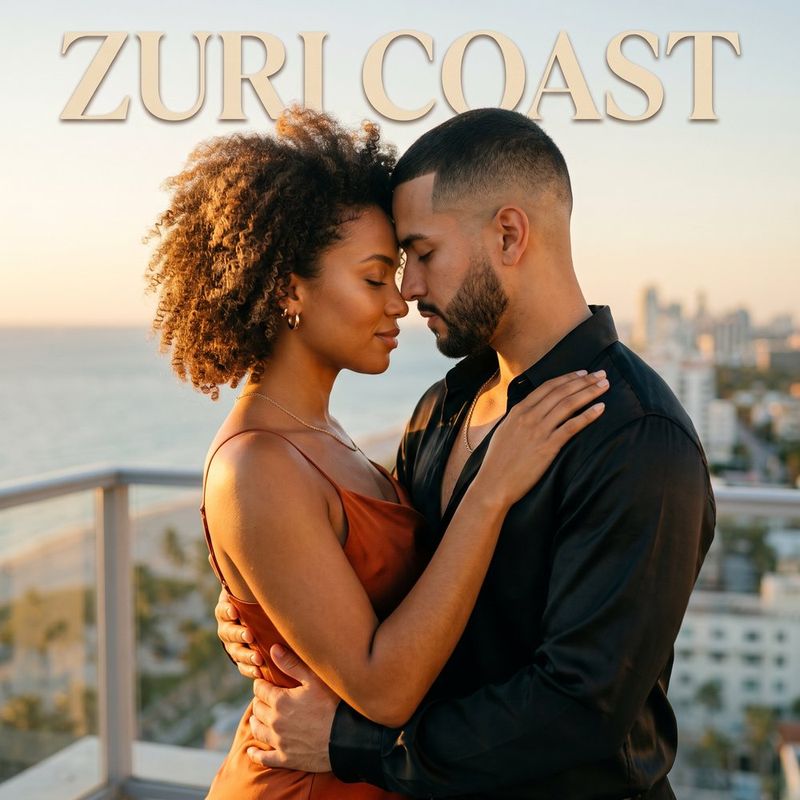
Then listen. The genre's founding voices are Angolan: Eduardo Paím, Paulo Flores, Anselmo Ralph and Yuri da Cunha, with Bonga for the semba roots. At Vectra Sounds, kizomba is the home of Zuri Coast, an AI persona made with AI music tools: a duo, Nalú and Santi, singing kizomba in Portuguese, Spanish and English. Every song has its own page with a 45-second preview.
Kizomba: “Explore Angola: Kizomba music helps renew Angola's cultural identity”, with Eduardo Paím, from Euronews' official YouTube channel.