Trova bolero
The original: a trovador singing his own romantic song to his guitar in Santiago de Cuba, with the syncopated cinquillo rhythm.

Genre guide
Latin America's great love song: born in Santiago de Cuba in the 1880s, made famous by Mexico's radio, cinema and guitar trios, and listed by UNESCO in 2023.
Bolero is a slow, romantic Latin American song genre with sophisticated lyrics about love, born in Santiago de Cuba in the 1880s and usually written in 2/4 or 4/4. It was first sung by trovadores to their own guitars and later by trios of three voices and guitars, and UNESCO calls it an indispensable part of the Latin American sentimental song.
The bolero was born in Santiago de Cuba in the 1880s among the trova's guitar-playing singer-songwriters. José "Pepe" Sánchez, a tailor turned musician, wrote "Tristezas" in 1883, regarded as the first bolero, and taught the next generation of trovadores. The early Cuban bolero carried a syncopated rhythm called the cinquillo, and in 1925 the Trío Matamoros fused it with son cubano into the bolero-son, a favourite on Cuban dance floors.
Around the turn of the century the song crossed by sea to Yucatán and reached Puerto Rico. Mexico made it a mass music: XEW, the country's first powerful radio station, went on the air in 1930 as Agustín Lara rose, and radio and the golden age of cinema made the bolero the most popular music in Mexico. Los Panchos met in New York in 1944, added the requinto guitar in 1945 and became the model for every trío romántico, carrying the bolero to Spain, Puerto Rico, Peru and Argentina. Havana's filin movement renewed it in the 1950s, and Olga Guillot and Lucho Gatica were crowned its queen and king.
Ranchera and rock and roll overtook it in the 1950s, but the trios kept touring, Armando Manzanero wrote a new songbook, and Luis Miguel's 1991 album Romance brought the bolero back to a young audience. In December 2023 UNESCO inscribed the bolero of Cuba and Mexico on its list of the Intangible Cultural Heritage of Humanity.
One slow love song, many settings: from a lone trovador's guitar to the trio, the big band, the mariachi and the orchestra.
The original: a trovador singing his own romantic song to his guitar in Santiago de Cuba, with the syncopated cinquillo rhythm.
The Trío Matamoros's fusion with son cubano, famous by the 1930s; "Lágrimas negras" (1930) is the classic.
Mexico's three voices in harmony over two or three guitars, the requinto on the melody, set by Los Panchos from 1944.
Havana's jazz-tinged renewal of the bolero from the late 1940s to the early 1960s, named after the English word "feeling".
A bolero sung with mariachi instead of a trio, a Mexican style Javier Solís was among the first to record.
Slow vocals over big-band mambo arrangements in the 1950s, and the string-laden revival of Luis Miguel's Romance in 1991.
Bolero collection
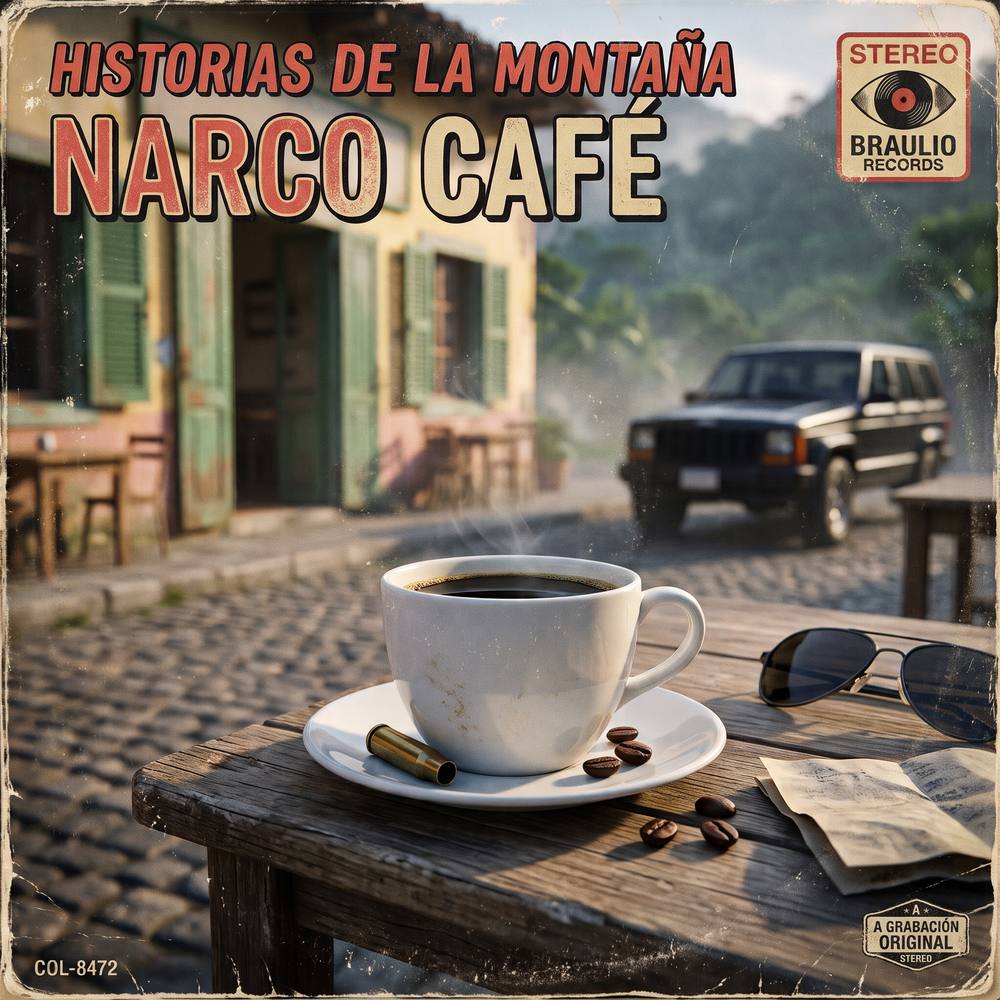
Narco Café is a bolero collection from Vectra Sounds: slow Latin boleros and cinematic ballads set in a small corner café in a quiet mountain town, where the coffee is strong and nobody asks questions. The songs follow the regulars: the boss who always pays in cash, the waitress who hears everything, the young man who wants in, and the mother who prays he stays out. Every song is original music made with AI music tools. Every song has its own page.
From Santiago de Cuba, where the trova's singer-songwriters created it in the 1880s. José "Pepe" Sánchez wrote the first bolero, "Tristezas", in 1883, and the song crossed to Mexico and Puerto Rico around the turn of the century.
Both, in sequence: born in Cuba in the 1880s, made a mass music in Mexico by radio, cinema and the trios from the 1930s on. Cuba and Mexico nominated it together to UNESCO, which listed it in 2023.
No. The Spanish bolero is an eighteenth-century dance in 3/4 with castanets, and Ravel's 1928 piece is built on that dance. The Latin bolero is a slow song in duple meter from Cuba and does not owe its origin to the Spanish one.
Yes. Luis Miguel's Romance sold over eight million copies, Cuba's Boleros de Oro festival has run since 1987, new boleros are still written, bachata grew out of it, and UNESCO listed it in 2023.
A streaming app for the next generation of music.