
What Is Bolero?
Bolero is a slow, romantic Latin American song genre with sophisticated lyrics about love. It was born in Santiago de Cuba in the 1880s among the guitar-playing singer-songwriters of the trova, crossed to Mexico and Puerto Rico in the early twentieth century, and in Mexico radio, cinema and trios such as Los Panchos made it the most popular music of the 1930s to the 1950s, from where it spread across the Spanish-speaking world.
In December 2023 UNESCO inscribed "Bolero: identity, emotion and poetry turned into song", a joint nomination by Cuba and Mexico, on its Representative List of the Intangible Cultural Heritage of Humanity. UNESCO calls the bolero an indispensable part of the Latin American sentimental song: a blend of the language of European poetry, the rhythms brought by enslaved Africans and the sentiments of the Indigenous peoples of the Americas, passed down within families and still being written today.
Not the Spanish Bolero, and Not Ravel's
Three different things share the name. The Spanish bolero is a dance in 3/4 time with guitar and castanets that grew out of the seguidilla in the second half of the eighteenth century and is linked to the court dancer Sebastián Cerezo around 1780. Ravel's "Boléro" (1928) is an orchestral piece in 3/4 built on that Spanish dance: one theme repeated over an unbroken snare-drum rhythm in a single crescendo, written for the dancer Ida Rubinstein and premiered at the Paris Opéra on 22 November 1928. The Latin bolero of this guide is a slow song in duple meter born in Cuba a century after the Spanish dance, and it does not owe its origin to it.
The Music: What Does Bolero Sound Like?
A bolero is a slow song in duple meter, usually written in 2/4 in Cuba and in 4/4 elsewhere. The early Cuban bolero carried a syncopated rhythm Cubans call the cinquillo, a five-note Caribbean cell also found in the contradanza and the danzón. From Agustín Lara and Los Panchos on, the Mexican bolero rounded that into a slow duple "one-rest-three-four" beat with no trace of the cinquillo, smooth enough for the dance floor by 1940.
The guitar came first: the trovadores sang their own songs to it, alone, then in duos, trios and quartets. The trio format that Mexico perfected puts three male voices in three-part harmony over two or three guitars, with the requinto, a smaller guitar tuned a fourth higher, carrying the melody on top. Trío Matamoros added maracas and claves; tropical orchestras from the 1930s brought piano, bass and trumpets; big bands made the bolero-mambo; the bolero ranchero swapped the trio for a mariachi; and Luis Miguel's 1991 album Romance dressed the classics in orchestral strings.
The lyrics are the point. UNESCO describes them as poetry about love and everyday life, and the songs live in Spanish first, though "Bésame Mucho", written by the Mexican composer Consuelo Velázquez in 1932, was recognized in 1999 as the most recorded Spanish-language song of all time, with English lyrics by Sunny Skylar and a 1962 recording by the Beatles. Vietnam even adopted the bolero from the 1930s and still has a slower tradition of its own.
The Dance: Is Bolero Danced?
Yes, in more than one way. In Cuba the bolero was dance music as much as song: the bolero-son of the Trío Matamoros was a long-time favourite on Cuban dance floors, and when it was marketed abroad in the early 1930s the dance was renamed "rumba", the name International-style ballroom still uses at about 120 beats per minute. In Mexico the smoothed bolero of the 1940s was made for the dance floor and stayed a popular slow partner dance even after rock and roll took over.
In American Rhythm ballroom, bolero is a dance of its own: 4/4 music at roughly 92 to 104 beats per minute, a slow-quick-quick step with Cuban motion and a controlled rise and fall borrowed from the waltz, slower and more sweeping than rumba. UNESCO's listing notes that bolero's bearers write it, perform it and dance it.
The Styles of Bolero
Trova bolero
The original form: a lone trovador singing his own romantic song to his guitar in Santiago de Cuba, with the syncopated cinquillo rhythm. Pepe Sánchez taught the next generation, including Sindo Garay, Rosendo Ruiz, Manuel Corona and Alberto Villalón.
Bolero-son
The Trío Matamoros's fusion of the bolero with son cubano, famous by the 1930s and a favourite Cuban dance music. Miguel Matamoros's "Lágrimas negras", composed in 1930 and first recorded in 1931, is the classic example and has since been recorded by Celia Cruz, Omara Portuondo, José Feliciano and many others.
The trío romántico
Mexico's three voices in three-part harmony over two or three guitars, a high first voice and the requinto on the melody, set by Los Panchos from 1944 and copied by Los Tres Diamantes, Los Tres Ases and Los Tres Reyes. Its golden era ran from the late 1930s to the early 1960s.
Filin
Havana's renewal of the bolero from the late 1940s to the early 1960s: jazz-tinged romantic song named after the English word "feeling", with César Portillo de la Luz, José Antonio Méndez, Frank Domínguez, Elena Burke and Omara Portuondo, popularized on radio and in cabaret by Olga Guillot and Elena Burke.
Bolero-mambo, bolero-cha and bolero ranchero
Big bands set slow, lyrical vocals over mambo arrangements, and the 1950s bolero-cha used a cha-cha-chá rhythm. In Mexico, Javier Solís, "El Rey del Bolero Ranchero", was among the first to sing boleros backed by a mariachi instead of a trio.
The 1990s revival
Classic boleros re-recorded with orchestral strings for a pop audience, led by Luis Miguel's Romance (1991), produced with Armando Manzanero: twelve boleros first recorded between 1944 and 1986, more than eight million copies sold, and a new generation of listeners.
A Short History of Bolero
The 1880s. In Santiago de Cuba, the tailor and musician José "Pepe" Sánchez (1856 to 1918), the father of the trova style, writes "Tristezas" in 1883 (some sources say around 1885), regarded as the first bolero. He composed in his head and never wrote his music down, so only about two dozen of his songs survive, transcribed by friends and students.
1900 to the 1920s. The bolero crosses by sea to Yucatán, takes root among singers in Mérida and is carried to Mexico City; it reaches Puerto Rico too. In Yucatán it becomes an essential part of the trova yucateca, whose leading voice was Guty Cárdenas, and Mexico gets its first boleros in the early 1920s. In Santiago, the Trío Matamoros forms in 1925 and by the 1930s has made the bolero-son famous.
1930 to the 1940s: Mexico's golden age. XEW, Mexico's first powerful radio station, goes on the air in Mexico City on 18 September 1930, and Agustín Lara's rise coincides with it. Radio and the golden age of Mexican cinema make Lara a giant and the bolero the most popular music in the country; Pedro Infante sings it on screen, and Cuban stars Benny Moré and Rita Montaner build careers in Mexico. By the 1930s the bolero is a staple of the repertoire across Latin America.
1944 to the 1960s: the trios. Los Panchos meet in New York in 1944: Chucho Navarro and Alfredo Gil from Mexico and Hernando Avilés from Puerto Rico. In 1945 Gil has a smaller guitar made, tuned a fourth higher, and the requinto gives the trio its sound; after they return to Mexico City in 1948 and perform on XEW, every famous trio follows their model, and in 1964 they back Eydie Gormé on the album Amor, a United States chart success. Meanwhile Havana's filin movement renews the song, Olga Guillot and Lucho Gatica are crowned queen and king of the bolero, and Benny Moré records with Pérez Prado and forms his Banda Gigante.
The 1950s to the 1980s. Ranchera and rock and roll overtake the bolero in the Mexican mainstream in the 1950s, and its popularity declines in the second half of the 1960s, though the trios keep touring and Armando Manzanero writes a new postwar songbook: "Somos novios", "Contigo aprendí", "Esta tarde vi llover" and more than four hundred other songs.
1991 to today. Luis Miguel's Romance brings the bolero back to the mainstream and to younger listeners. Cuba's Boleros de Oro festival, held since 1987, once staged what was billed as the longest bolero in the world: nearly 600 singers over 76 hours in 2001. On 5 December 2023, at its 18th session in Kasane, Botswana, UNESCO's committee inscribes the bolero of Cuba and Mexico on the Representative List, the first binational nomination Cuba joined under the convention, after a decade of work.
Bolero, Bachata and the Latin Ballad
The bolero runs through much of Latin romantic music. The first Dominican recordings of what became bachata, from José Manuel Calderón's in 1962, were regarded at the time as a variant of bolero, and the arpeggiated, repetitive guitar chords of bachata still carry the family likeness. In Cuba the bolero fused with the son into the bolero-son and renewed itself as the filin; in Mexico the bolero ranchero married it to the mariachi, and Los Panchos carried the bolero and the romantic ballad across Latin America. Composers named for the bolero beyond Cuba include Rafael Hernández in Puerto Rico and Agustín Lara, María Grever and Juan Gabriel in Mexico.
How to Get Started with Bolero
Start with the trios and the voices: Los Panchos for the trio sound, Trío Matamoros for the bolero-son, Olga Guillot and Lucho Gatica for the 1950s, Benny Moré for the big band, Javier Solís for the mariachi, and Luis Miguel's Romance for the modern orchestral bolero. Listen for the slow duple beat, the requinto answering the voice, and lyrics that treat love as poetry.
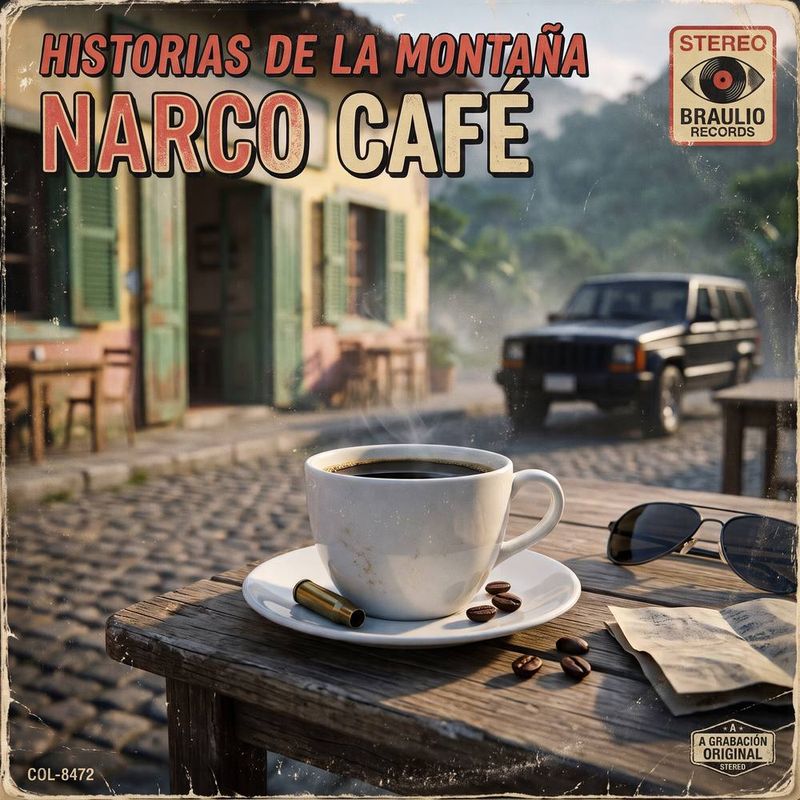
At Vectra Sounds, the bolero lives in Narco Café, a collection made with AI music tools: slow Latin boleros, rumba and cinematic ballads from a corner café in a quiet mountain town, where the coffee is strong and nobody asks questions. Every song has its own page with a 45-second preview.
Bolero: Luis Miguel sings Armando Manzanero's “No Sé Tú”, from Warner Music México's official YouTube channel.